
Why Modern Electronics Require True Process Science
The concepts on which electronics manufacturing relies were developed in the 1950s for attaching heavy wires to vacuum tube sockets. Today's components are easily damaged by techniques that worked well for vacuum tube assemblies; training perpetuates the old ways — with disastrous cost and warranty consequences.
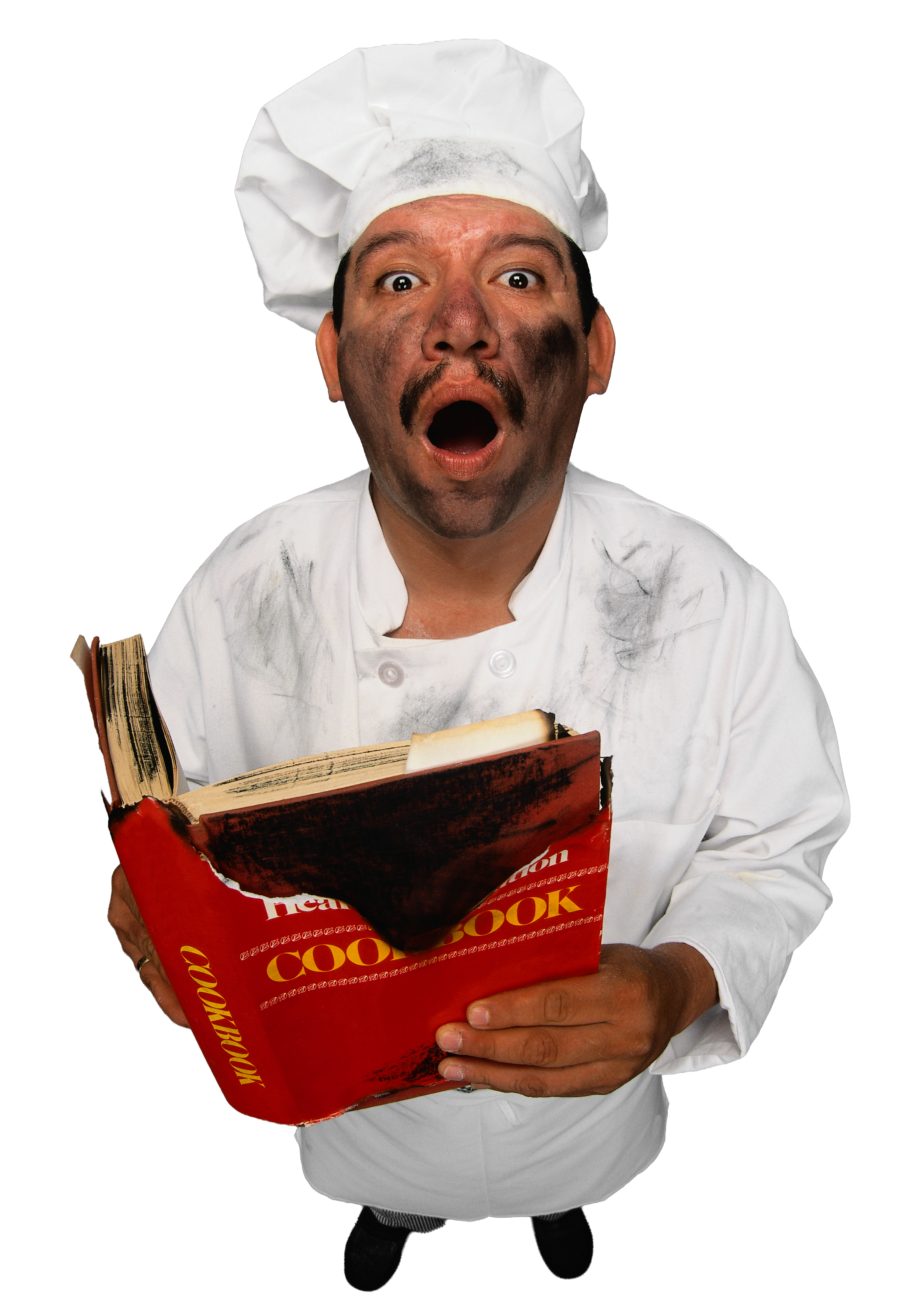
Techniques built for indestructible metal tube sockets damage modern micro-electronics.
Seeing a defect once is unfortunate.
Seeing it again and again is indefensible.
We educate rather than train. There is no memorization—everything is taught through visual experiments, hands-on troubleshooting, and a detailed 78-page reference workbook.
In principle, electronics assembly is no different from commercial baking - except bakers can’t rework a defective cake.
Bakers survive and thrive by executing a precise recipe specifying exact ingredients, mixing techniques, and temperature profiles. We developed the 7-step soldering "Recipe" defined by chemistry, metallurgy, and physics. The recipe ensures defect-free soldering. If a defect occurs, corrective action is easily accomplished by comparing what was done to what the recipe dictates.
Failure to follow the recipe guarantees defects
Following the recipe guarantees perfect results
We developed the powerful "Recipe" for perfect soldering. While it is a bit more complex than cake recipes, it's easy for anyone to understand. And each step is thoroughly explained then demonstrated in action and with hands-on experiments.
Operators deserve - and want - practical education rather than mindless training.
"Our hourly workers can’t understand science.
They just need to be told what to do."
— The most destructive assumption in manufacturing management.
Treating operators like human robots who only memorize picture standards and rules guarantees high scrap rates, high turnover, and endless rework. Science of Soldering© proves that when operators understand the chemical, physical and metallurgical forces that control solder's behavior, they become your strongest line of defense against defects:
Most companies assume soldering education is only important for operators. Yes, operators need process knowledge—but they are only one link in a complex technical hierarchy. Most other departments also have roles that determine producibility, reliability and general operator ability. Those departments and actions include:
Yet traditionally, none of these key decision-makers ever receive process science education. Expecting operators to deliver zero-defect assemblies when the rest of the organization lacks necessary process knowledge isn't just unrealistic—it's impossible.
Educating Design, QA, Management, and other professional personnel pays off in higher throughput, lower costs, happier customers and greater profitability.
Classes for groups are available on-site at your offices or live via Zoom. Open registration live Zoom classes are also offered for smaller groups and individuals. Train-the-trainer using our materials is a low-cost alternative for large numbers of employees.